

|
Golliwogg.co.uk |

Golliwogg.co.uk
|
|||||||
|
The Celebrity
Collector - Clinton Derricks |
|||||||
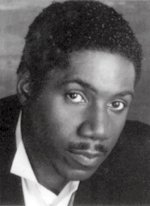
His immersion into golliwogs culminated last year in the publishing of a book he wrote titled "Buy Golly!" "My apartment in Hollywood looks like a museum," Derricks said with a laugh. "I've got dolls, toys, books and ephemera on shelves, on walls, everywhere. It's very ordered and tasteful." The golliwog doll actually began life as a storybook character created in 1895 by Florence Kate Upton, a writer living in New York before returning to England with her family. Her first book, "The Adventures of Two Dutch Dolls", was an instant hit with kids in Great Britain. But it was a character based on a doll Upton owned as a child that became the star. She named the doll on a whim: "He fell into our hands when we were children," Upton wrote. "He came from an American Fair, and in those days he was nameless. I picked him up in my studio, and without even the idea of a name passing through my head, I called him 'Golliwogg'" (The second "g" was later dropped.) She would go on to write a dozen more books, all with Golliwog in the title. That's how popular he was. Golliwog was a caricature of the American black face minstrel performers of the time. Derricks said the argument could be made that Upton meant for him to be more gnome-like, but the golliwog's features round eyes, thick lips, fuzzy hair and broad grin fed into a racial prejudice that was endemic in Victorian Edwardian Britain. A flood of golly-related items only perpetuated that. By the 1960s, the golliwog and other similar emblems were seen as symbols of racism. They faded from shelves for the most part, although a handful of companies still make the golliwog dolls and related items today - mostly as modern-day relics of another time and place (one best left in the past, many would say). Over the years, though, millions of golliwog items were mass-produced. Many of those items have found their way into Derricks' collection, thanks in part to an acting gig in London that resulted in his living there for more than a decade (1985-1996) and permitted him to shop for vintage gollies right where they were born. "I gobbled up everything I came across at first," he said. "Later on, I got a bit more discerning, but I was very much into the history and lore." Among his prized items are first-edition copies of Upton's books, including the first one in the series; an original Merrythought doll from the 1930s (Merrythought produced golliwog dolls in Britain for years and still makes them today); an original golliwog doll from Gamages' department store in 1902 (where they were first sold); and a 1913 doll from Atlas Manufacturing, another maker. A group of three golliwogs are particularly prized for their uniqueness: a soldier golliwog dressed in British khaki uniform (quite rare); a girl golliwog (not many of the dolls were depicted as girls); and a third doll, with blue jacket, red trousers and red bow tie. "They were made around 1910-1912," Derricks said. "I bought them at auction in London. They're beautiful vintage pieces." He also has an original Allwin doll from 1924 (Allwin, or Richards Son Allwin, was another primary player back in the doll's heyday). "It's a Ringmel green golliwog, made of felt, with an orange nose," Derricks said. "It looks a little like a clown." He also has many badges, placards and advertising signs from Robertson's, a jam maker that used the golliwog as its mascot for over 20 years. Once, in London, Derricks scored a coup over actor and fellow collector Whoopi Goldberg. "I saw a pair of Chad Valley (another manufacturer) dolls on tricycles, and I asked the shopkeeper how much. He told me he was holding them for Whoopi Goldberg, I told him it might be anybody's guess when she'd be back in England. He eventually saw things my way and sold me the pieces." Most of the items in Derricks' collection are older, vintage items and one-of-a-kinds. He has it all insured (for an undisclosed amount), but has no idea as to its aggregate worth. "I know what I've spent over the years, and it's quite a bit, so I'm sure it's valuable," he said. He added golliwogs have caught on as collectibles in other countries notably the United States, Australia and even Japan. Derricks has other collections, too. He owns three vintage pedal cars; jukeboxes from the '40s (two Rock-Olas and a Seeburg); several carousel horses; vintage watches; and vintage cars and motorcycles, to include a 1968 MGC sports car, a 1967 TVR "kit car," a 1949 Citroen Legere, a 1970 Italia Spyder once owned by the actor Lyle Waggoner, and a 1964 Matchless trials motorcycle. To research "Buy Golly!", Derricks poured through books and other material at the London Library, Pollock's Museum and the London Toy Museum all in England. He also became familiar with the fabrics, buttons and other materials that went into making the early gollies. "Much of that material was destroyed, or went into two war efforts," he said. "That's why they're so rare today." About Clinton DerricksClinton Derricks was born May 15, 1959, in Knoxville, Tenn. His father was a Baptist minister and his mother was an aspiring concert pianist before joining her husband in the church. Clinton (along with his twin brother Cleavant, who would also go on to enjoy a career in acting and music, and sister, Gwendolyn) grew up in Knoxville, Jackson (Tenn.); Beloit, Wis., and Washington, D.C. As their father took on ministries in different parts of the country, the family moved with him, and it exposed young Clinton to many influences and levels of acceptance and racial prejudice. He said the prejudice he and his brother encountered in Washington, D.C., was far worse than anything he experienced in Beloit, Wis., which is predominantly white. "We had a rough time in D.C." he said. Acting wasn't on his mind when he enrolled at Federal City College in Washington, D.C., in the mid-'70s. He was (and still is) artistically inclined, and selected studio art as a major. But he had always sung in the church choir and grew up around music all his life, so when an opportunity came to audition for a role in a touring company version of "Don't Bother Me, I Can't Cope," he took it. He got an understudy role and was encouraged by the cast members who told him he was a gifted talent who could act and sing. Inspired, he left school and moved to New York City, where he came under the wing of producer-director Vennette Carroll. She was so helpful in getting Clinton's career started he considered her a second mother and often uses the name Clinton Derricks-Carroll. Derricks' stage credits include appearances on Broadway ("I Have a Dream", "Dreamgirls", "Your Arms Too Short to Box With God"), British theatre ("Time", "Miss Saigon", "Grand Hotel") and television ("Introducing Dorothy Dandridge", "Sanford", "Hill Street Blues", "Highway to Heaven", "The Steve Harvey Show"). He just concluded a stage production in Los Angeles, a tribute to Ruby Dee. Projects in the works include a possible to return to the British stage (he didn't want to jinx it by naming the play). Meanwhile, Derricks stays busy restoring carousel horses, playing the guitar and saxophone (he's trying to master both) and maintaining his golliwog collection. He plans to write another book, this one about the many black and white celebrities who collect black memorabilia. Fans of Clinton Derricks may write to the star c/o Jan Ross, Gollyfest, P.O. Box 1634, Mill Valley, CA 94942. The e-mail address is gollyfest@aol.com. |
|||||||
© Copyright 2006-26 golliwogg.co.uk. All rights reserved.
