

|
Golliwogg.co.uk |

Golliwogg.co.uk
|
|||||||
|
Whatever happened to Florence Upton? |
|||||||
|
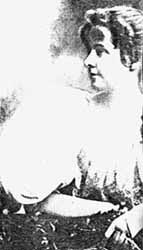
The children who first embraced Florence Upton's Golliwog inevitably grew up. Fashions and fads changed, and Florence herself was yearning to pursue her career as a serious, professionally trained artist. The last of the Golliwogg books was published in 1909 and Bertha’s death in 1912 truly brought the adventures to a close.
Frustrated by delicate health, Florence was found unfit to serve in any physical capacity during the First World War. However, she satisfied her determination to help out by donating her original dolls and drawings to a fund-raising auction for the Red Cross, conducted by Christies in 1917. To her horror, the dolls and hundreds of drawings were catalogued to be sold as one lot. Despite her misgivings that it would never sell, the lot was indeed purchased for a considerable amount. The money realised from the sale of her drawings purchased an ambulance, aptly christened ‘Golliwogg’, which went to the front and served in France. It is sobering to consider that some soldiers must have owed their lives to their hero from a not-so-distant childhood. At the age of only 49, Florence Upton died in her studio on 16 October 1922, from complications following surgery. She is buried in West Hampstead Cemetery. For many years her vandalised grave was unidentifiable, with the headstone toppled face-down in the grass. The stone has now been set upright, courtesy of a Heritage Lottery grant, and awaits restoration. The original Golliwogg and Dutch Dolls resided for many years at Chequers, the Prime Minister’s country estate in Berkshire. They now receive visitors at the Museum of Childhood at Bethnal Green, London. It is difficult nowadays to appreciate the enormous impact that the Golliwogg had at the height of his career. Florence Upton’s friend and biographer, Edith Lyttelton recollected, "One of my children, long before we knew who Bertha and Florence Upton were, had a passionate attachment to the doll stories, and a new Golliwogg book was a great excitement in my nursery as in countless others." Children and parents alike were frantic to learn of the Golliwogg’s latest escapade with the same sort of feverish passion that a new Harry Potter book inspires in modern readers. Unfortunately, Florence neglected to patent the character and consequently lost a considerable amount in royalties. Recognising a large and profitable market, many toy companies took advantage of the popularity of the books and started to manufacture the doll, while other writers and illustrators took equal advantage, but in doing so changed the very soul of the Uptons’ creation. The prolific Enid Blyton chose to depict her golliwogs as rude, stupid and untrustworthy little gremlins and other authors took a similar tack. Nasty-minded people seized upon the name as a degrading term for anyone who wasn’t white-skinned, blithely inventing convoluted explanations of the origin of the word. Florence Upton despaired, ‘I am frightened when I read the fearsome etymology some deep, dark minds can see in his name.’ It was Florence herself who came up with the innocent moniker, very probably unconsciously based on what American children call tadpoles – the pollywog. Despite the negative connotations that have arisen over the years, everyone who has owned a golliwog expresses nothing but affection for the toy. For many, he eclipsed even the teddy bear as a chosen companion. |
|||||||
© Copyright 2006-26 golliwogg.co.uk. All rights reserved.
